Exactly How To Read A Peptide Pureness Examination: Hplc, Mass Spectrometry And Coa Interpretation For Uk Researchers 2026
We have the ability of serving clients from early peptide medicine discovery stages to peptide analysis. We give all the technological details and instructions for every action of peptide synthesis and evaluation. The release procedure of peptide formulas Semax is intricate, and an absence of clinical data prevents advancement. We establish in vitro release designs, supplying total release contours and kinetic model evaluation to enhance product style. Among the most common sources of complication in peptide jobs is utilizing various high quality terms as if they imply the same point.High purity is desirable since also little contaminants may hinder experimental results or analyses. This short article will break down how peptide pureness is gauged, why it's distinct from peptide identity, what the common purity degrees (95%, 98%, 99%) signify, and what "research-grade" indicates in method for peptide reagents. Lots of peptide programs encounter analytical unpredictability before they stop working clinically. We make use of sophisticated reverse-phase HPLC to establish the pureness of customer peptide examples.
The Certain Technique: Reversed-phase Hplc
- Chiral methods can resolve enantiomeric purity where stereochemistry is a concern.Peptide pureness is usually revealed as a percentage, such as 95% or 98%.Lab validation for peptides suggests using scientific examinations to verify a peptide's identity, pureness, and composition.This is why reputable vendors offer both HPLC and MS information on their Certificates of Analysis.
Matching HPLC, research laboratories make use of Mass Spectrometry (commonly combined as LC-MS) to confirm the peptide's molecular weight and series identity. Mass spectrometry supplies molecular verification by spotting the precise mass of the peptide and any type of co-eluting types or truncated series with high accuracy. With each other, HPLC and MS data enable experts to confirm that the peptide's structure matches what it needs to be (correct amino acid series and anticipated modifications) and that no considerable pollutants are present.
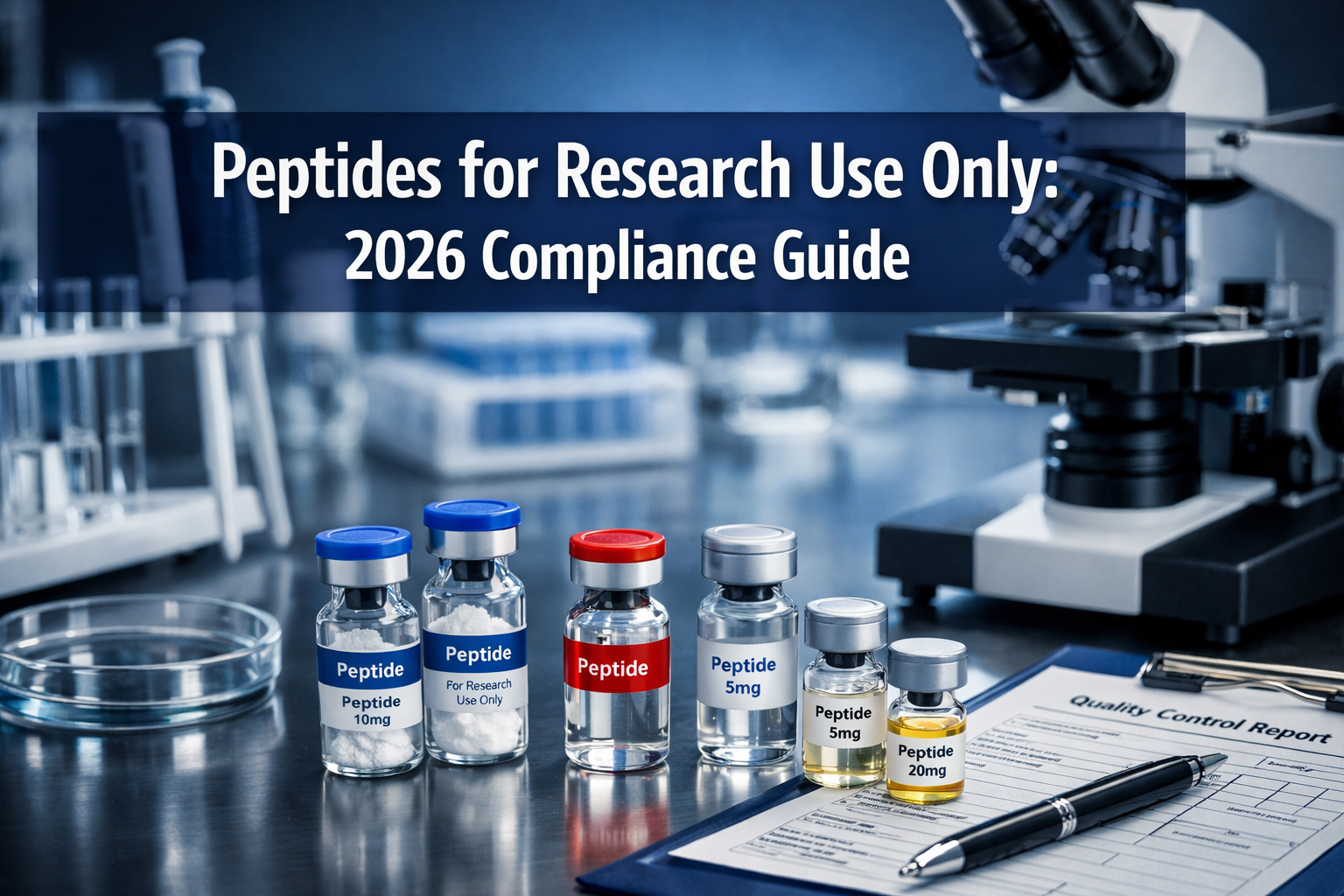

Additional Logical Tests On High Quality Coas
The injector presents an accurate volume of sample right into the mobile-phase stream. Constant shot quantity issues because overloading the column can widen tops, misshape pureness quotes, or hide nearby contaminations. A solid peptide testing workflow utilizes techniques that address corresponding concerns. The table below is the functional method to consider typical examinations when reviewing a peptide COA.
The gold requirement for measuring peptide purity is high-performance fluid chromatography, universally abbreviated as HPLC. If you see a purity portion on a peptide product, it likely came from an HPLC analysis. This issues since peptides are built one amino acid at a time with solid-phase peptide synthesis (SPPS). At each step, there's a little chance that something fails-- an amino acid doesn't connect, the wrong alteration takes place, or a side response generates an unintended result. Over a Purity Verification chain of 10, 20, or 40 amino acids, those tiny per-step error prices compound.
Peptide testing is the set of analytical checks made use of to examine a peptide example prior to it is used in a research workflow. In sensible COA testimonial, the term usually refers to purity testing, identity testing, and documentation evaluation. Pureness screening asks how much of the detected sample is the major peptide versus related contaminations. Identification testing asks whether the determined mass or sequence-related proof matches the designated peptide. Documentation review asks whether the report is batch-specific, deducible, and described enough to be investigated. Peptide screening is the analytical procedure used to confirm that a research peptide is both pure and appropriately recognized. FDA and the European EMA have developed standards mandating complete evaluation and quality control for peptide items to ensure safety and effectivenessr. In the context of pharmaceutical or clinical-grade peptides, research laboratory recognition is essential to satisfying these standards. For instance, prior to a peptide medicine can get in human trials, its supplier needs to demonstrate the identification, purity, effectiveness, and safety of the peptide through validated logical approaches. Peptide pureness screening information are compulsory in preclinical research studies and have to be included in investigational brand-new medicine (IND) applications and later on new medicine applications (NDAs).